

The legal structure and framework of mutual funds in India, primarily governed by the SEBI (Mutual Funds) Regulations, 1996, provides several safeguards and regulations to protect the interests of investors. The regulations cover aspects such as fund offerings, investment limits, disclosure requirements, valuation of assets, investor protection, and other operational matters. SEBI has designated Investor Service Centres (ISC’s) and has also provided a centralized web based complaints redress system on its portal, named ‘SCORES’. Here are some key aspects of the legal framework that help protect investors in Indian mutual funds:
In India, mutual funds are structured as trusts and regulated by the Securities and Exchange Board of India (SEBI). Therefore, they are governed by the Indian Trusts Act, 1882.
The trust structure provides a legal separation between the fund’s assets and the AMC’s liabilities, protecting investors’ interests.
Every trust has beneficiaries. The beneficiaries, in the case of a mutual fund trust, are the investors who invest in various schemes of the mutual fund.
The legal structure of mutual funds in India involves the following key entities:
Sponsor
The sponsor is the entity or organization that establishes the mutual fund and sets up the trust. The sponsor appoints an asset management company (AMC) to manage the mutual fund’s operations.
Board of Trustees
The trustee acts as a guardian of the interests of the mutual fund’s unit holders. They are responsible for ensuring compliance with SEBI regulations and protecting the interests of the unit holders. The trustee is a separate legal entity from the sponsor and the AMC. No AMC and no director (including independent director), officer, an employee of an AMC shall be eligible to be appointed as a trustee of a mutual fund. Prior approval of SEBI needs to be taken before a person is appointed as Trustee.
Mutual Fund Trust
A mutual fund is constituted in the form of a trust and the instrument of trust is in the form of a deed, duly registered under the provisions of the Indian Registration Act, 1908, executed by the sponsor in favour of the trustees named in such an instrument.
Asset Management Company (AMC)
The AMC is appointed by the sponsor to manage the day-to-day operations of the mutual fund. This includes making investment decisions, creating investment strategies, and overseeing the buying and selling of securities in line with the fund’s objectives. Atleast 50 percent of the directors on the board of AMC should be independent directors. That is, they should not be associate of or associated with the sponsor or any of its subsidiaries or the trustees. The AMC needs to have a minimum net worth of Rs. 50 crores maintained on a continuous basis.
Custodian
The custodian, usually a bank or financial institution, holds the securities and other assets of the mutual fund in safekeeping. They provide custody and settlement services, ensuring the safekeeping and proper management of the fund’s assets.
Registrar and Transfer Agent (RTA)
The RTA maintains records of the mutual fund’s unit holders, processes investor transactions, and provides other administrative services related to the issuance and redemption of mutual fund units.
Unit Holders
Investors who purchase units of the mutual fund and become beneficiaries of the assets and returns generated by the fund.
Organization Structure of AMC
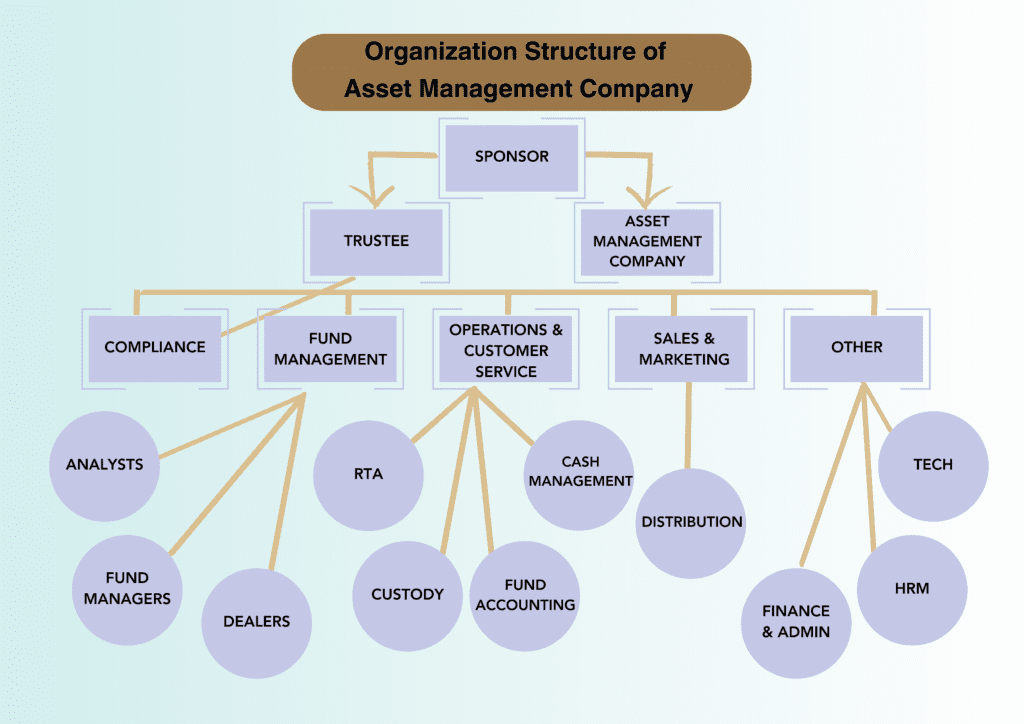
Source: NISM (SEBI) materials. The Chart attempts to explain the various functions within an AMC. Individual AMCs may have some differences in the structure.
Code of Conduct
Mutual fund managers and distributors are required to adhere to a code of conduct prescribed by SEBI. This code lays down ethical standards, duties, and responsibilities towards investors. It ensures that fund managers act in the best interests of investors and avoid conflicts of interest.
Disclosure and Transparency
Mutual funds are required to provide clear and concise information about their investment objectives, strategies, risk factors, fees, and expenses in their offer documents and periodic reports. They must disclose their portfolio holdings and performance on a regular basis. This transparency helps investors make informed investment decisions and monitor the fund’s activities.
Regulatory Oversight
SEBI conducts regular inspections and audits of mutual funds to ensure compliance with regulations and adherence to best practices. It monitors fund activities, portfolio composition, and disclosures to protect investor interests and maintain market integrity.